How do I find reliable tornado shelters near me in Alabama?

The quickest way to locate the nearest tornado shelter is by visiting the official Alabama Emergency Management Agency (AEMA) website or contacting your local county EMA office, which provides a list of public safe zones and community centers.
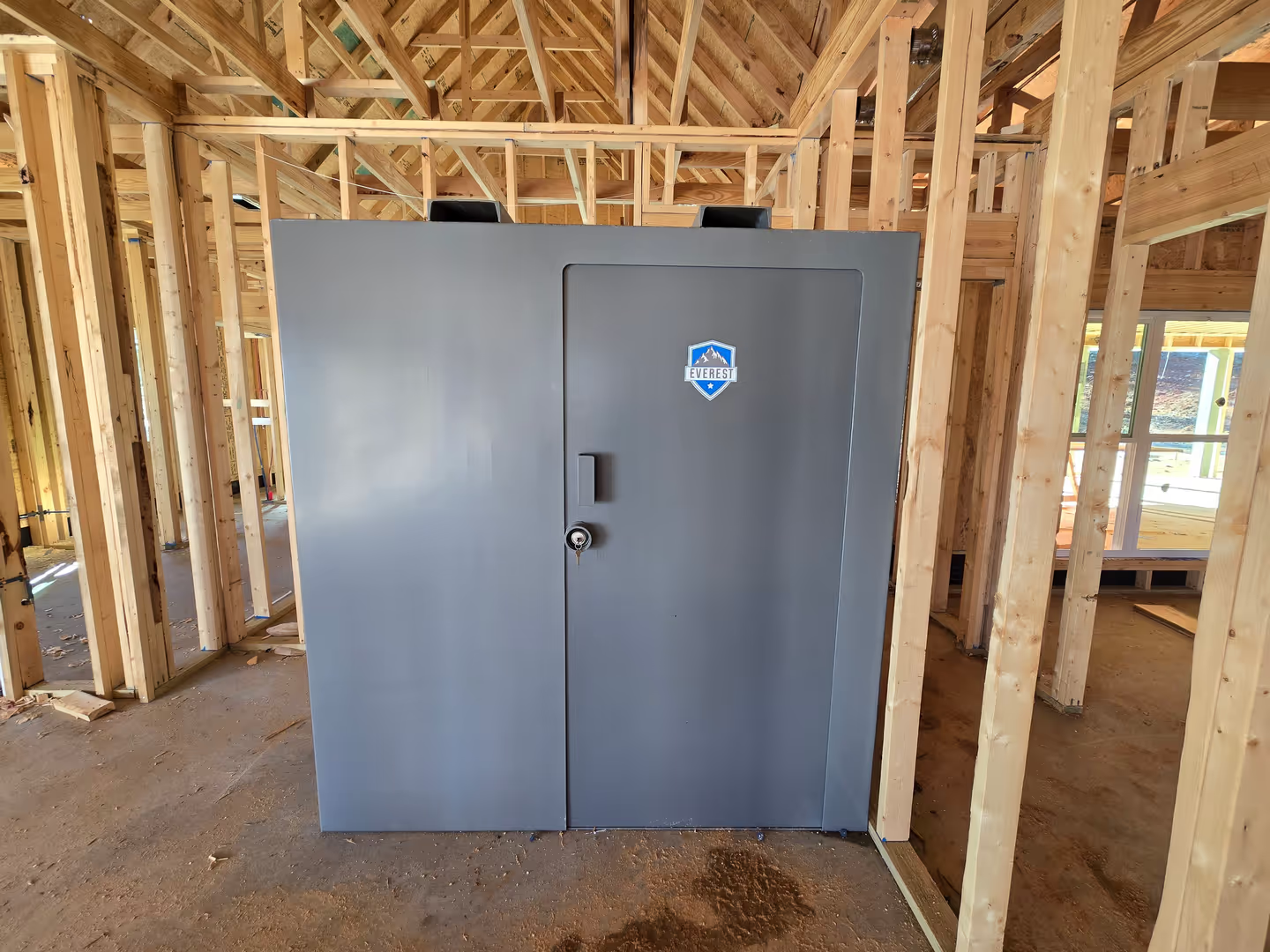
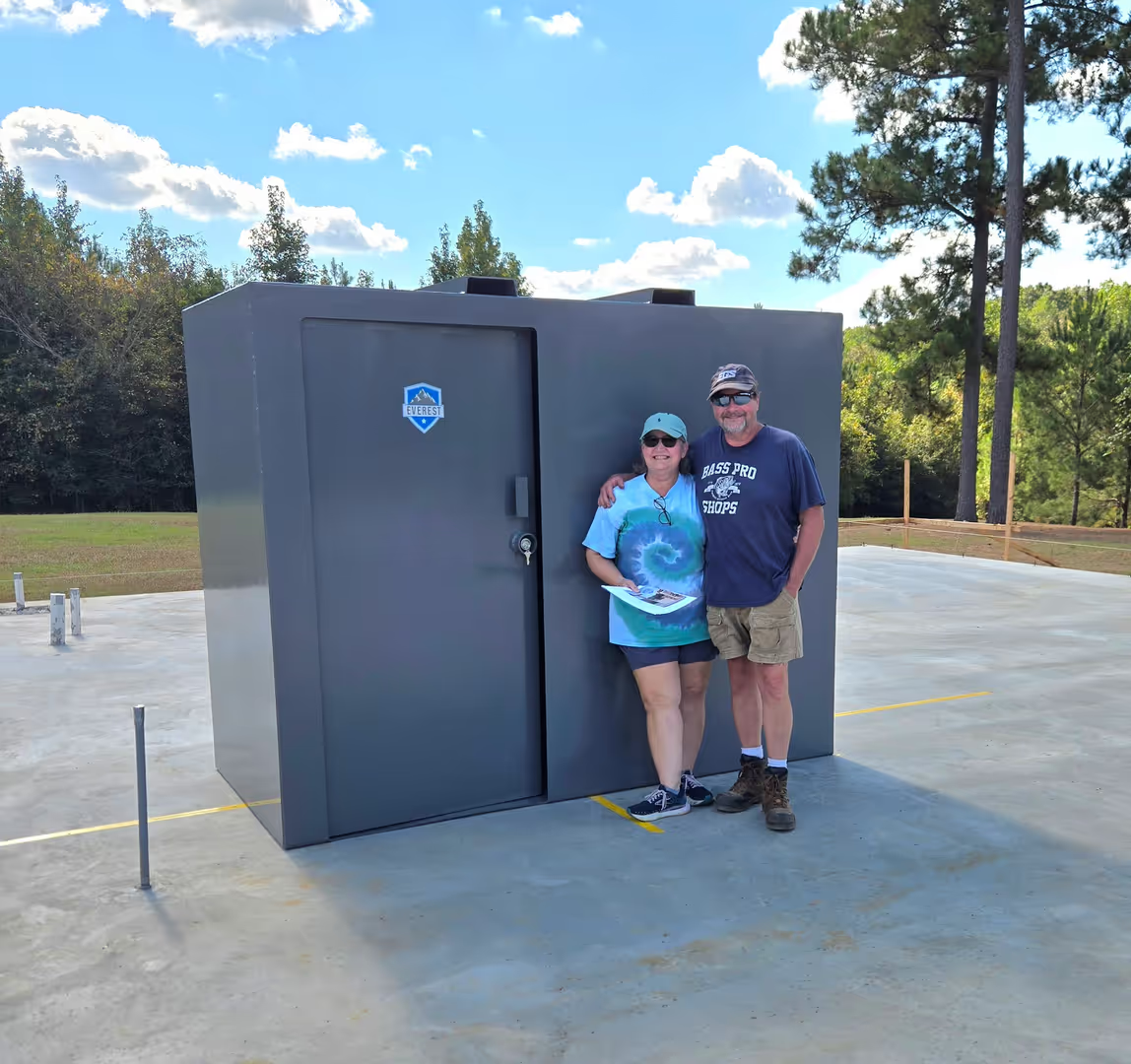
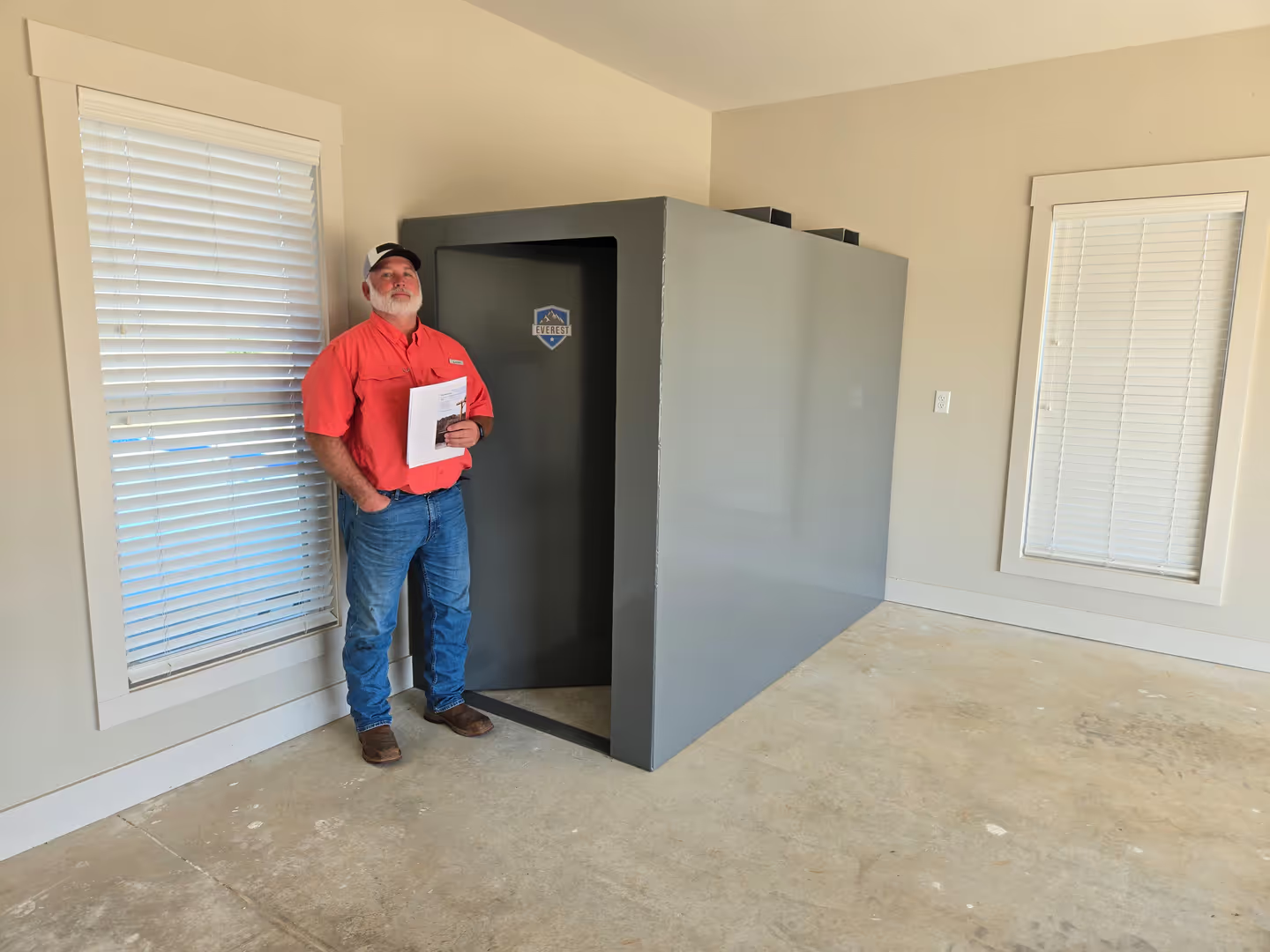
While these public options are vital for those on the road or in mobile homes, the most reliable way to ensure your family's safety is by installing a private storm shelter near me directly on your property. Having a dedicated safe room removes the stress of traveling during dangerous conditions and guarantees you have a secure, FEMA-compliant space ready at a moment's notice.
A Closer Look at Finding Reliable Tornado Shelters Near Me
When seconds count, knowing the location of the closest tornado shelter isn't just a matter of convenience—it’s a critical component of your emergency plan. In Alabama, the reliability of a shelter is defined by its engineering and its accessibility. While the state provides various public resources, true reliability comes from structures that have been tested against the extreme pressures of EF4 and EF5 tornadic winds.
Finding a Public Storm Shelter Near Me: What Actually Works (and Why)
To locate an immediate refuge, the Alabama Law Enforcement Agency and local EMAs maintain databases of verified community centers. These structures work because they are built to FEMA P-361 specifications, designed specifically to withstand 250 mph wind gusts.
- EMA Directories: Your county’s Emergency Management Agency is the gold standard for real-time shelter status.
- Safety Apps: Tools like the SAF-T-Net app can provide location-based alerts for the emergency storm shelter near me.
- Institutional Shelters: Local schools and municipal buildings often serve as dual-purpose safe zones, though their hours may vary.
What Influences the Right Choice for the Nearest Storm Shelter Near Me
Choosing the right shelter involves more than just proximity; it involves assessing your specific property and household needs.
- Accessibility: A storm shelter near me is only useful if you can reach it in under five minutes.
- Structure Type: Above-ground safe rooms are ideal for those with mobility issues, while underground units offer the psychological comfort of being below the frost line.
- Certification: Ensure any structure you visit or install is stamped by the National Storm Shelter Association (NSSA).
Finding a Tornado Shelter Near Me: Where Most People Get It Wrong
The most common mistake is assuming that "sturdy" residential areas, like interior closets or bathtubs, are equivalent to a certified safe room. Standard home construction is rarely designed to withstand the uplift forces of a major tornado.
Additionally, many wait until a "Tornado Warning" is issued to search for the nearest tornado shelter, often finding that public locations are already at capacity or that the roads are too dangerous to traverse. Proactive planning and on-site residential solutions are the only ways to guarantee a spot when the sirens sound.
What You Need to Know Before You Decide on the Nearest Storm Shelter Near Me
Selecting a storm shelter in Alabama requires more than just finding the closest structure; it requires verifying that the unit can actually survive the intense pressures of a major tornado. Before you commit to a location or a home installation, keep these essential factors in mind:
- Certification Standards: Any reliable nearest storm shelter near me must comply with FEMA P-361 and ICC 500 (2020 or newer). These standards ensure the unit has been tested to withstand 250 mph winds and heavy debris impact.
- Capacity and Access: Public shelters often fill up quickly. If you are relying on a community storm shelter near me, verify its pet policy and accessibility for those with limited mobility.
- Alabama Tax Credits: Since 2022, Alabama residents have been eligible for a state income tax credit of up to $3,000 for installing a qualified unpainted concrete above-ground storm shelter or other certified units at their primary residence.
- Registration: Once you find or install a shelter, register its coordinates with your local EMA so first responders know where to look for you if a storm causes significant damage to your property.
Choosing the Right Option for Your Situation
The ideal way to find a public tornado shelters near me or select a private unit depends heavily on your specific location in Alabama and your household’s needs. Environmental factors like soil composition and local water tables play a major role in determining which shelter type is truly "reliable."
- For High Water Tables (Coastal or Low-Lying Areas): In regions with high ground moisture, traditional underground steel units may face corrosion or buoyancy issues. An above-ground reinforced concrete shelter is often the superior choice here, as it provides EF5-rated protection without the risk of flooding or shifting.
- For High-Density or Mobile Home Communities: If you live in a mobile home park or a crowded residential area, a private residential unit is the safest bet. However, if that isn't an option, identifying the closest tornado shelter in a reinforced municipal building or a designated community storm shelter near me is your primary fallback.
- For Households with Mobility Issues: If your family includes seniors or individuals with physical disabilities, avoid ladder-entry underground pits. Instead, look for an above ground storm shelter near me with a flush-to-ground entry and a wide, ADA-compliant door.
- For Rural Alabama Properties: In rural areas where emergency response times may be longer, having an on-site underground shelter registered with local GPS coordinates ensures that first responders can locate your safe room even if the surrounding structures are leveled.
From Planning to Protection: Real-World Results
In practice, the most reliable storm shelter is the one you can reach in under five minutes. For many Alabama residents, this means moving away from a reliance on the closest tornado shelter in a public building and toward an on-site solution.
In professional installations across Alabama, we see a shift toward above-ground units because they eliminate the "drowning risk" of flash floods often associated with underground pits and provide easier access for those with mobility challenges.
Real-world application shows that homes with a dedicated safe room report significantly lower anxiety levels during tornado outbreaks. From a structural standpoint, professional projects emphasize the importance of the foundation; a shelter is only as strong as its anchoring.
This is why many homeowners opt for an unpainted concrete above-ground storm shelter, which provides the mass and impact resistance required to withstand EF5 debris without the maintenance needs of painted steel.
When these units are professionally installed, they are often registered with local EMA databases via GPS, ensuring that even if your home is damaged, rescue teams know exactly where to find your nearest storm shelter near me on the property.
Choosing Your Best Path to Safety
In Alabama, the search for a public storm shelter near me often concludes with the realization that personal, on-site protection offers the highest level of security. While public facilities are a vital resource for those in transit, an above-ground safe room or residential underground shelter ensures your family never has to brave the elements to reach safety.
By understanding the certification standards and utilizing state tax credits, you can confidently secure a FEMA-compliant refuge. Ultimately, the best choice is the one that allows you to act immediately when a warning is issued, keeping you out of harm's way.
.webp)